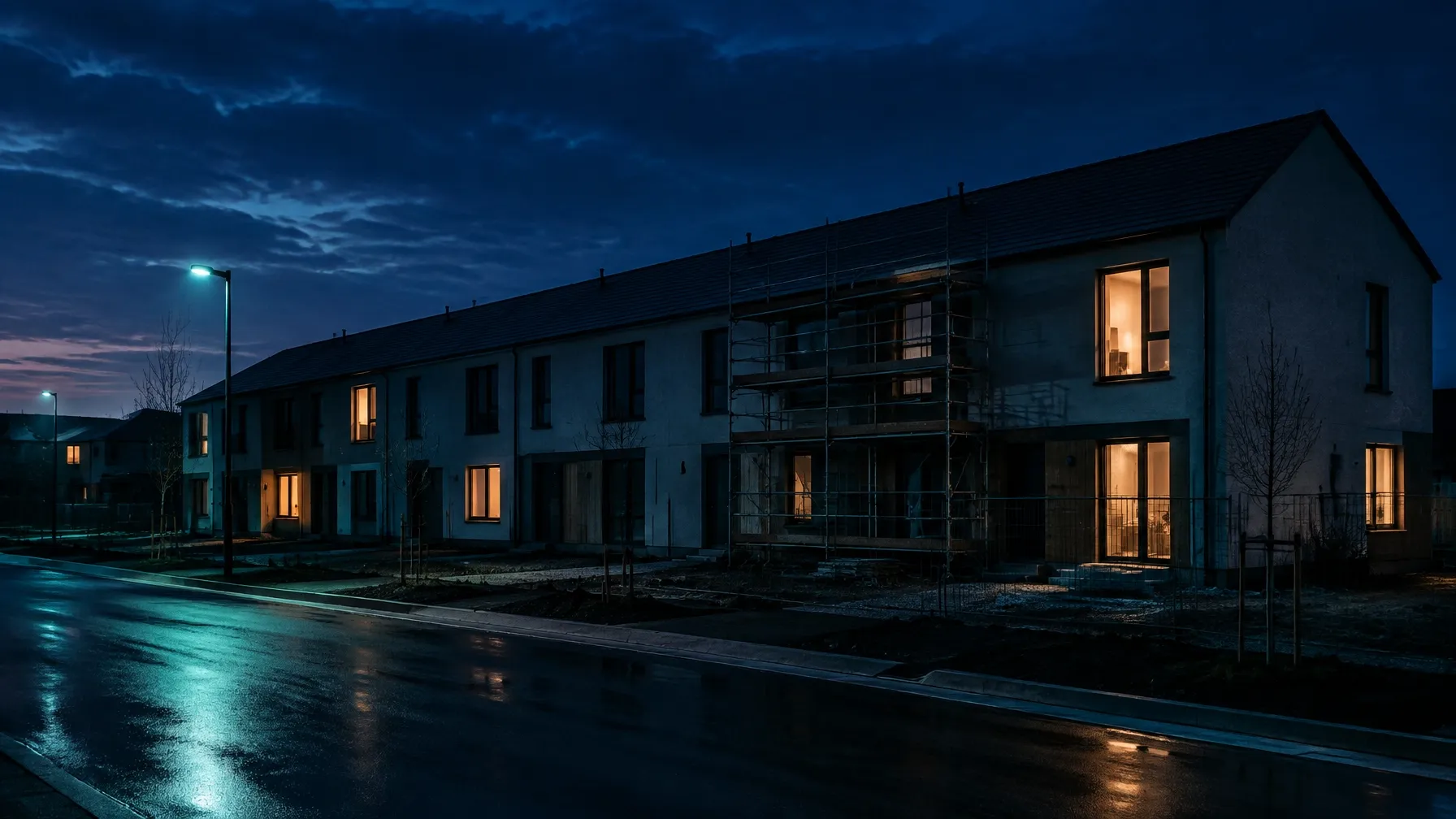
Southern Luzon's Next Construction Cycle: Industrial Growth, Housing Demand, and Readiness

Southern Luzon's Next Construction Cycle: Industrial Growth, Housing Demand, and Readiness
Southern Luzon is seeing several large industrial developments move forward at the same time. A new container terminal in Bauan, steel production planned for Lemery, and expansion at LIMA Estate all point to a changing construction landscape in Batangas and the wider corridor.
For a construction business owner, the question is not simply, “Is there growth?” It is: “Will my business be ready when an opportunity reaches my lane?”
That distinction matters. Announced investments can indicate where demand may develop, but they are not the same as awarded contracts, funded packages, or mobilized work. The firms best placed to respond are those that can see opportunities early and demonstrate that they have the people, documents, suppliers, and processes to deliver.
Industrial expansion: projects with different construction needs
The industrial layer is taking shape through projects with distinct requirements and timelines.
ICTSI is building the South Luzon Container Terminal in Bauan, Batangas, with an announced investment of US$800 million and a planned annual capacity of 1.6 million TEUs. Work began in September 2025, and completion is targeted for 2027. These are announced targets and may change. For construction and supply businesses, a port project of this kind represents potential demand across areas such as site development, civil works, structural steel, industrial buildings, and support facilities. ICTSI’s announcement provides project details.
At LIMA Estate, the announced plan is to expand by 500 hectares, from 1,100 to approximately 1,600 hectares over the next decade. A 20-hectare Japanese semiconductor plant is slated to break ground there in November 2026. That date is a planned milestone, not a guarantee of completion or a signal that every associated contract has been awarded. The expansion and proposed facility point to possible demand for industrial buildings, estate infrastructure, utilities, and related support facilities. Aboitiz’s announcement, as reported by Philstar, covers the estate expansion.
SteelAsia Lemery Works is developing a 72-hectare steel facility in Lemery, Batangas, with a reported investment of ₱19.82 billion and support from the Board of Investments. Operations are set to begin in January 2027, an announced target subject to change. The development represents another significant industrial construction program in the province. SteelAsia’s project announcement through the BOI offers further context.

Taken together, these projects suggest potential workloads that span site preparation, civil and structural work, industrial facilities, and support infrastructure. But a potential workload is not yet a purchase order.
The distinction that matters: announced investment versus awarded work
There is a practical lag between a headline and a contractor’s opportunity. A project can be announced while its approvals, procurement packages, funding arrangements, schedules, and delivery requirements continue to take shape.
This means a business should treat announcements as signals to investigate, not as confirmed revenue. Before allocating resources or making commitments, firms need to establish what is actually open for bidding or procurement, what requirements apply, and whether their capacity fits the work.
The discipline is to track the project’s path from announcement to funded and mobilized activity. That includes watching for official tender notices, understanding qualification criteria, checking timelines, and knowing who is responsible for procurement. It also means distinguishing a large project’s overall value from the specific packages that may become available to a firm.
Housing and support demand can outlast the construction headline
Industrial growth does not stop at the factory gate. A growing employment base creates recurring needs for housing, worker facilities, retail fit-out, and maintenance. Needs that can continue after the main construction phase is complete.
LIMA Estate has more than 200 locators and approximately 75,000 employees, with 250,000 jobs projected. These figures describe different things: the first two reflect the estate’s current scale as reported in Aboitiz announcements; the jobs figure is a projection, not a current employment count. It should be read as an indication of potential future demand, not a guarantee of when or whether that demand will arrive.
For businesses serving the construction and property ecosystem, this longer view matters. The opportunity may include building or maintaining worker facilities, adapting retail spaces, or supporting housing and other services as employment grows. Yet timing and scale depend on actual development and hiring. Firms should watch for concrete projects and procurement needs rather than treating projected jobs as immediate demand.

Infrastructure spending is a planning signal, not a project list
The Philippine government’s 2026 infrastructure spending program is targeted at ₱1.27 trillion, revised from an initial ₱1.56 trillion and a January estimate of ₱1.3 trillion. About ₱741 billion is prepared for the second half of 2026, while the 2027 program is pegged at ₱1.34 trillion, according to DBM reporting. These are program-level figures, not announcements of specific Southern Luzon projects or tenders. See the Department of Budget and Management’s infrastructure reporting.
For contractors and suppliers, the useful response is not to assume that a share of the national program will automatically become local work. It is to be ready to assess specific opportunities when they are announced. That means having current credentials, understanding the relevant licensing and qualification requirements, and tracking tenders through reliable channels.
What readiness looks like at the firm level
A firm does not need to chase every headline. It needs a clear view of what it can deliver and a reliable way to respond when the right opportunity appears.
A practical readiness check includes:
- Current credentials: Confirm that business records, licenses, and required qualifications are current and easy to retrieve.
- Organized project experience: Keep relevant project histories and supporting documentation in a format that is ready for assessment.
- A bid-ready document library: Maintain accurate, version-controlled company and technical documents so a response does not start from scattered files.
- Scalable supplier arrangements: Know which suppliers can support the required materials, volumes, and timing, and where capacity needs confirmation.
- A repeatable opportunity-tracking system: Record what has been announced, what has reached procurement, what qualifications apply, and what decision or follow-up is due.
These habits turn readiness into something visible. They help business owners decide which opportunities fit, which need more preparation, and which should be declined.

AI can support parts of this system (for example, organizing information or helping teams review opportunity records) but it does not replace valid qualifications, delivery capacity, sound judgment, or the actual procurement process. Any use of AI tools here should follow the same discipline as anywhere else in the business: only approved tools may be used, and no confidential project, client, or financial information goes into an AI system without the owner's explicit approval. The value comes from making the operating picture clearer, not from treating technology as a shortcut to a contract.
Why the layers compound
Industrial growth, housing demand, and infrastructure spending can overlap, but they do not move on one schedule. A port, an estate expansion, a steel facility, workforce needs, and public programs each have their own approvals, procurement paths, and delivery timelines.
That overlap rewards firms whose operating systems can see across the layers. A company that tracks only the loudest announcement may miss a more relevant opportunity in support facilities or maintenance. A company that can compare its capabilities against different requirements can direct its preparation where it has a credible fit.
Growth is not a schedule. Announced timelines are targets subject to change, and projected demand does not automatically become work. Readiness is the practical bridge between regional momentum and a firm’s ability to respond.
The takeaway: make readiness visible
Southern Luzon’s next construction cycle is taking shape through industrial investment, a growing employment base, and national infrastructure planning. Those signals are meaningful, but they are not substitutes for funded projects, awarded packages, or confirmed procurement.
For construction businesses, the priority is to stay visible, documented, and ready: know your qualifications, organize your proof of experience, maintain supplier relationships, and track opportunities through to specific requirements.
If you want to strengthen how your business tracks, evaluates, and acts on opportunities, work with Gerome as your AI-native business consultant. Are you looking for the AI Integration offering of Gerome? Visit www.geromeinocencio.com.